
Private flight William P. Hobby
You can arrange a private flight William P. Hobby through a broker who compares several Houston operators. Hobby sits at 46 ft elevation with 7,602 ft of runway, so most midsize and super-midsize jets handle it comfortably. The six on-site FBOs give you real choice in where you meet the crew.
- KHOU · HOUairport codes
- 46 ftfield elevation
- 7,602 ftlongest runway
- 0 mito New York
William P. Hobby Airport (HOU/KHOU) is the closer of Houston's two commercial airports to downtown, roughly seven miles south of the central business district. For private flights, that proximity matters: you are off the aircraft and on the way to a meeting while traffic on I-45 is still crawling. The tradeoff is that Hobby is a busy commercial field, so charter movements are scheduled around airline traffic and the fixed-base operators handle the general aviation side.
The runway is the reason many charter quotes list Hobby without restrictions. At 7,602 ft, the longest strip handles light jets through large-cabin aircraft, though the heavier long-range types may prefer George Bush Intercontinental for nonstop transoceanic legs. Hobby's 46 ft elevation is essentially sea level, so density altitude is rarely the limiting factor here, unlike mountain airports where summer heat cuts payload.
Six FBOs serve the field: Wilson Air Center, Million Air Houston, Jet Aviation Houston, Atlantic Aviation, Signature Aviation and Henriksen Jet Center. That competition keeps ramp fees and handling charges competitive, but it also means the quote you receive should specify which FBO your crew plans to use. If you are comparing charter companies, ask each one to name the FBO and include the fee in the estimate so the total is apples-to-apples.
What Hobby runway length means
Hobby's longest runway measures 7,602 ft, enough for a midsize jet to depart fully fueled on most domestic routes. That 7,602-foot runway at Hobby supports midsize jets on most domestic legs without a fuel stop, though summer heat and a full cabin can push a super-midsize aircraft toward a tech stop on the longest transcontinental plans. If you are flying a light jet with four passengers, then Hobby's runway length is rarely a constraint. If your trip involves a heavy jet bound for Europe, then expect your broker to suggest a different Houston airport.
| Rwy | Len | Wid | Pavement |
|---|---|---|---|
| 04/22 | 7,602 ft | 150 ft | Concrete |
| 13R/31L | 7,602 ft | 150 ft | Asphalt |
| 13L/31R | 5,148 ft | 100 ft | Concrete |
Getting to and from Hobby
Hobby is about seven miles from downtown Houston, with direct access from I-45 and the Gulf Freeway, and the drive typically takes 15 to 25 minutes depending on traffic. Ground access to William P. Hobby via I-45 keeps downtown Houston within a short drive, which is why many travelers pick Hobby over Bush Intercontinental for in-town meetings. If you are arriving from Galveston or the Clear Lake area, then the southern approach on I-45 is usually the fastest route. If your flight arrives during a weekday afternoon, then allow extra time for rush-hour traffic on the downtown spur. TSA screening applies only at the commercial terminal, not the FBOs, so private passengers go directly to their aircraft.
Private jet routes via William P. Hobby
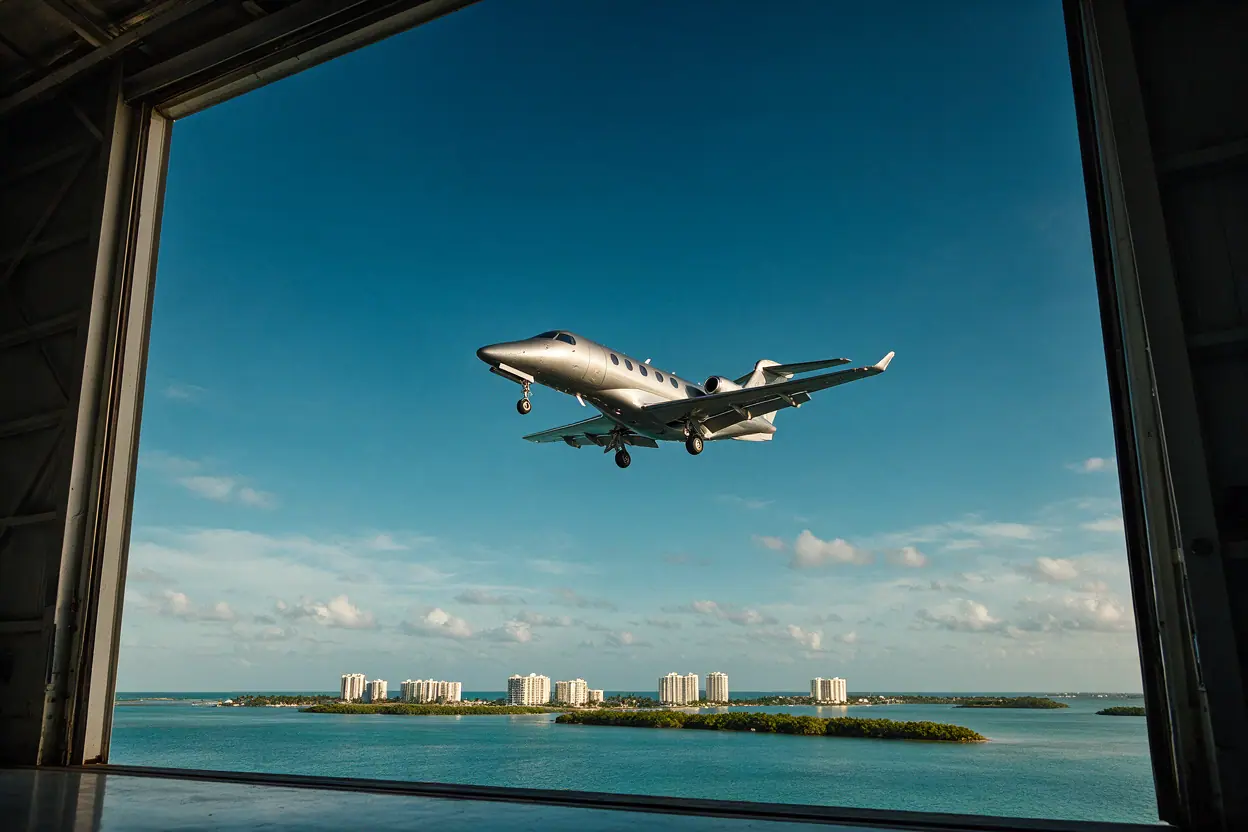
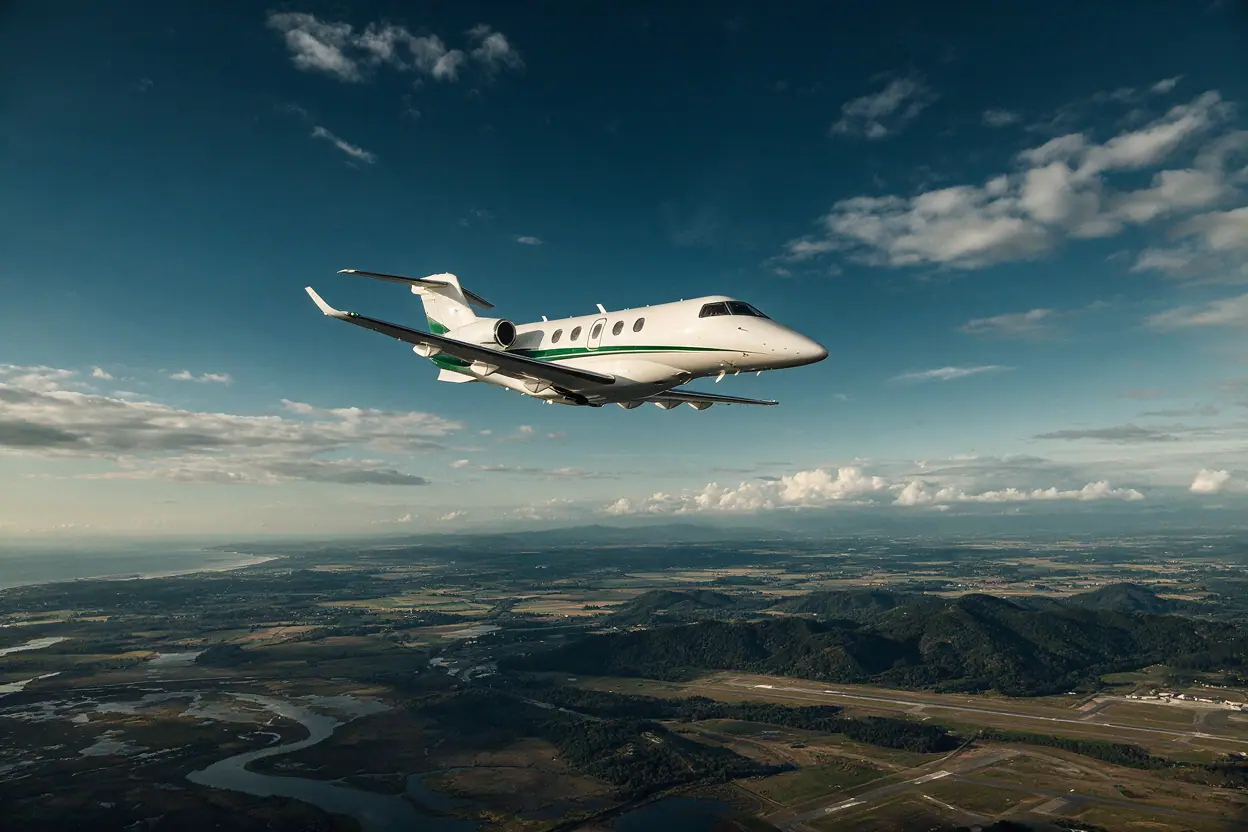
The 6 private jet routes listed span 199 to 2,129 nautical miles, with one-way light jet estimates ranging $4,000 to $36,000.

Six FBOs affect Hobby quotes
Six FBOs operate at Hobby, and the choice of which one your crew uses affects the ground portion of your quote. Choosing among the six Hobby FBOs changes the ramp fee your estimate includes and sometimes the waiting area your passengers see. When you compare broker quotes, ask each one to identify the FBO in writing, because the handling charge can vary from one to another and should not be buried in a fuel surcharge.
Passengers departing on an international leg should confirm where U.S. Customs and Border Protection clearance happens, since not every FBO at a busy commercial field processes international arrivals. If your flight returns from Mexico or the Caribbean, then your broker should state the CBP arrangement in the quote rather than leave you to discover it at the ramp.
Who uses private flights at Hobby
- Downtown Houston business travelers who want the shortest drive from the aircraft to a meeting.
- Energy and medical professionals flying to Midland, Dallas Love Field, or the Gulf Coast on day trips.
- Groups heading to Texas A&M or University of Houston events who prefer Hobby's south-side location.
- Passengers connecting to international leisure destinations who want to avoid the commercial terminal at Bush Intercontinental.
| Class | Runway needed (typical) | Local |
|---|---|---|
| Turboprop | 3,300 ft+ | No limit |
| Light jet | 4,000 ft+ | No limit |
| Midsize jet | 5,000 ft+ | No limit |
| Super-midsize jet | 5,200 ft+ | No limit |
| Heavy jet | 5,600 ft+ | No limit |
Hobby density altitude by season
Hobby's elevation is 46 ft, so density altitude stays modest year-round; the peak figure is about 2,700 ft in the hottest month. Peak density altitude at Hobby reaches about 2,700 ft in Houston's hottest month, which is well below the thresholds that force payload cuts at mountain airports. July averages a high of 91 F with a density altitude near 2,200 ft, and the shoulder months of April and October sit at 78 F and 81 F respectively.
If you are flying a turboprop or light jet on a hot August afternoon, then density altitude is worth a sentence in the quote but rarely a change of plan. If your itinerary involves a heavy jet departing with full tanks for a long leg, then the operator may still calculate performance margins on the day. Houston's wet days peak at 17 in August, so allow for weather delays on summer afternoons when thunderstorms build along the Gulf.
| When | Mean high | Precip. days | Density alt |
|---|---|---|---|
| Jan | 63°F | 11 | 300 ft |
| Feb | 67°F | 13 | 600 ft |
| Mar | 73°F | 13 | 1,000 ft |
| Apr | 78°F | 15 | 1,300 ft |
| May | 84°F | 16 | 1,700 ft |
| Jun | 89°F | 16 | 2,100 ft |
| Jul | 91°F | 16 | 2,200 ft |
| Aug | 91°F | 17 | 2,200 ft |
| Sep | 87°F | 15 | 1,900 ft |
| Oct | 81°F | 10 | 1,500 ft |
| Nov | 72°F | 11 | 900 ft |
| Dec | 67°F | 11 | 600 ft |
Inquiries for this airport
What runway length does a private flight William P. Hobby use?
The longest runway at Hobby is 7,602 ft, which accommodates light jets through large-cabin aircraft. At 46 ft elevation and with a peak density altitude near 2,700 ft, the field rarely imposes payload limits on typical domestic trips. If your trip involves a heavy jet bound for Europe, then your broker may suggest a different Houston airport with a longer strip.
Which FBOs can a private flight William P. Hobby use?
Six FBOs serve Hobby: Wilson Air Center, Million Air Houston, Jet Aviation Houston, Atlantic Aviation, Signature Aviation and Henriksen Jet Center. Your quote should name the FBO your crew plans to use, because ramp fees and handling charges differ. If you are comparing charter companies, then ask each one to state the FBO and fee in writing.
How hot does it get at Hobby in summer?
July and August average highs of 91 F, with density altitude around 2,200 ft. The peak density altitude reaches about 2,700 ft in the hottest month, which is well below the figures at mountain airports where summer heat cuts payload. If you are flying a light jet on a hot August afternoon, then performance margins remain comfortable but should still be confirmed by the crew.
Is Hobby closer to downtown Houston than Bush Intercontinental?
Yes, Hobby is roughly seven miles south of downtown, with direct access from I-45, while Bush Intercontinental sits about 20 miles north. The drive from Hobby to downtown typically takes 15 to 25 minutes depending on traffic. If your meeting is in the central business district, then Hobby usually saves time on both ends of the trip.
Does a private flight William P. Hobby clear customs on site?
Not every FBO at Hobby processes international arrivals, so confirm the CBP arrangement before booking a return from Mexico or the Caribbean. If your itinerary includes an international leg, then your broker should state in the quote where U.S. Customs and Border Protection clearance will happen. Domestic flights do not require CBP clearance at the FBO.
What should I check in a private flight William P. Hobby quote?
Ask for the FBO name, the ramp fee, the crew duty time, and whether the price includes fuel and taxes. If the quote comes through a broker, then the broker should give you a written estimate that itemizes each charge. When comparing options, use the same aircraft category and the same passenger count so the totals are comparable.