Private charter jet companies Chicago Midway
Private charter jet companies Chicago Midway serve a close-in airport with one 6,522-foot main runway. Midway sits at 620 feet elevation where July density altitude reaches 2,300 feet. This guide covers runways, FBOs, and how to compare quotes.
- KMDW · MDWairport codes
- 620 ftfield elevation
- 6,522 ftlongest runway
- 0 mito New York
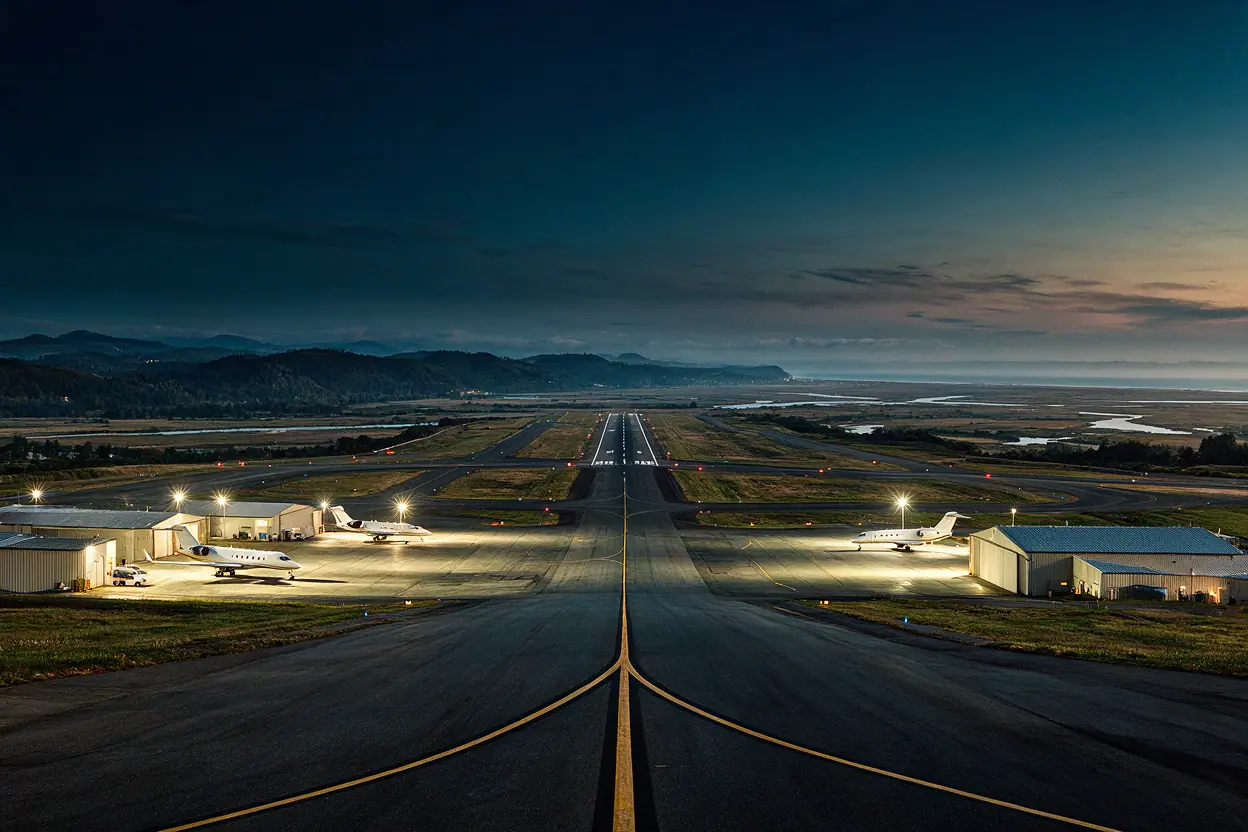
Chicago Midway International Airport (KMDW) is a city airport, not a suburban reliever, and that shapes which private charter jet companies Chicago Midway can use it well. The field has one primary runway of 6,522 feet and sits 620 feet above sea level, figures that matter for departure planning on warm afternoons. Private jet flights from Midway benefit from a close-in location and two on-field FBOs that handle charter arrivals and departures. Because the airport is also a busy commercial hub, ground movement and terminal traffic can affect timing, but charter passengers typically use the FBO side.
For charter operators, Midway is a familiar stop, but not every aircraft type fits every mission. The 6,522-foot runway sets a practical limit for heavier jets on hot days when density altitude climbs. In July, the average high reaches 82 F and density altitude averages 2,300 feet, while the peak figure for the hottest month is 2,800 feet. Those numbers are well within range for many midsize and light jets, but they can affect fuel loads and passenger counts on longer legs. Charter companies flying from Chicago Midway plan around summer density altitude rather than treating the runway length as a year-round constant.
When you request quotes, you are comparing charter companies, not walking up to a counter. Each company will propose an aircraft and an operator, and the price you see is an estimate that can move with fuel, fees, and crew scheduling. Comparing private charter jet companies Chicago Midway quotes side by side reveals differences in aircraft age, category, and included fees that a single quote hides. Ask for the breakdown: base rate, landing fees at Midway, crew overnight if any, and taxes. The airport's two FBOs, Atlantic Aviation and Signature Aviation, each set their own handling charges, so the same aircraft can carry different ground costs depending on which one is used.
Runway length and performance at Midway
Midway's longest runway is 6,522 feet at an elevation of 620 feet, and that combination is the first thing a charter company checks against your mission. A 6,522-foot runway at 620 feet elevation shapes which jets can depart fully loaded on warm days. For light and midsize jets, the runway is generally ample for regional legs; for large-cabin aircraft headed to the West Coast with full tanks, the operator may reduce payload or plan a fuel stop. If your trip is a summer afternoon departure to a high-elevation destination, then expect the quote to reflect performance limits rather than a simple distance calculation. When density altitude rises, then the same jet may need a longer runway or a lighter load, which is why the operator's performance analysis matters more than the brochure range. At Chicago Midway, private charter jet companies regularly balance runway length against summer temperatures to set safe payloads.
| Rwy | Len | Wid | Pavement |
|---|---|---|---|
| 13L/31R | 6,522 ft | 150 ft | Concrete |
| 04R/22L | 6,445 ft | 150 ft | PEM |
| 04L/22R | 5,507 ft | 150 ft | Asphalt |
| 13R/31L | 3,859 ft | 60 ft | Concrete |
Access and ground logistics
Charter passengers typically arrive by car or rideshare to the FBO. The airport's two FBOs, Atlantic Aviation and Signature Aviation, are the access points for private charter flights, not the main terminal. If your itinerary includes an international leg, then plan for CBP clearance; Midway is a port of entry, but not every charter itinerary clears customs on arrival, so confirm with your company. For domestic flights, you will generally bypass the commercial terminal and its TSA screening, but always carry identification as required by the operator. When you book, then ask which FBO your flight uses and whether your driver should be directed there rather than to the main terminal. Parking and drop-off at the FBOs are limited, so coordinate timing with the crew.
Private jet routes via Chicago Midway
The 6 private jet routes listed span 199 to 2,129 nautical miles, with one-way light jet estimates ranging $4,000 to $36,000.

FBOs and ground handling at Midway
Two FBOs serve general aviation at Midway: Atlantic Aviation and Signature Aviation. Both FBOs handle private charter arrivals and departures, but their fees and facilities differ, so the choice can affect your total. Your charter company will usually direct you to the FBO its operator uses, and that is where you will meet the crew and board. If you have a preference, then ask at the quote stage whether it can be accommodated without changing the aircraft or price. Ground handling charges at Atlantic Aviation and Signature Aviation are separate from the charter rate, so confirm whether they are included or billed separately. Neither FBO is a terminal; you will not go through the main commercial security line for a domestic charter departure. For private charter jet companies Chicago Midway FBO choice can swing the final estimate by a meaningful margin.
Best uses for a Midway charter
- Business travel to downtown Chicago, where Midway's close-in location saves ground time compared with suburban airports.
- Short regional hops to Midwest cities where a light or midsize jet fits the 6,522-foot runway with room to spare.
- Summer trips planned around density altitude, with aircraft chosen for the day's performance rather than brochure range.
- Groups comparing multiple charter companies for a single mission and wanting transparent FBO and fee breakdowns.
| Class | Runway needed (typical) | Local |
|---|---|---|
| Turboprop | 3,300 ft+ | No limit |
| Light jet | 4,000 ft+ | No limit |
| Midsize jet | 5,000 ft+ | No limit |
| Super-midsize jet | 5,200 ft+ | No limit |
| Heavy jet | 5,600 ft+ | No limit |
Weather and density altitude by season
Midway's density altitude swings from about -1,000 feet in January to 2,300 feet in July, based on average highs and humidity. Summer is the planning season: July averages a high of 82 F and a density altitude of 2,300 feet, while the peak figure used for performance planning is 2,800 feet. Those conditions are moderate compared with high-altitude airports, but they still matter for turbojets departing with full fuel. If you are flying on a hot July afternoon, then a light jet may be the better match for a short leg, while a midsize or larger jet can handle longer trips with a payload adjustment. Winter brings the opposite: January's average high is 33 F and density altitude drops to about -1,000 feet, which generally helps performance but can bring snow and deicing delays. When winter weather moves in, then build extra time into your schedule for deicing and runway changes; the airport's operations can shift quickly. Spring and fall are the most forgiving, with April density altitude around 700 feet and October around 1,000 feet.
| When | Mean high | Precip. days | Density alt |
|---|---|---|---|
| Jan | 33°F | 10 | -1,000 ft |
| Feb | 37°F | 10 | -700 ft |
| Mar | 48°F | 11 | 0 ft |
| Apr | 58°F | 13 | 700 ft |
| May | 69°F | 14 | 1,400 ft |
| Jun | 80°F | 13 | 2,200 ft |
| Jul | 82°F | 13 | 2,300 ft |
| Aug | 81°F | 12 | 2,200 ft |
| Sep | 76°F | 10 | 1,900 ft |
| Oct | 63°F | 11 | 1,000 ft |
| Nov | 49°F | 8 | 100 ft |
| Dec | 40°F | 9 | -500 ft |
Inquiries for this airport
Which private charter jet companies serve Chicago Midway?
Many charter companies can arrange flights from Chicago Midway, but they are not based at the airport; they source aircraft from operators. The two on-field FBOs, Atlantic Aviation and Signature Aviation, handle based and transient aircraft. When you request a quote, you are comparing companies on aircraft category, operator history, and included fees. Ask for the operator's certificate and insurance details, and confirm which FBO the flight will use.
What is the runway length at Chicago Midway for private jets?
The longest runway is 6,522 feet, and the airport elevation is 620 feet. For most light and midsize jets, that is enough for regional and many cross-country legs. On hot summer days, density altitude can reduce performance, so a large-cabin jet bound for a distant city may need a payload adjustment or a fuel stop. The operator will run performance numbers for your specific trip.
How does density altitude affect departures from Midway in summer?
In July, the average high is 82 F and density altitude averages 2,300 feet, with a peak planning figure of 2,800 feet. Those conditions are moderate, but they still matter for turbojet performance, especially on longer legs with full fuel. If your trip is on a hot afternoon, then the operator may adjust passenger or baggage load. Winter is the opposite: January's average high is 33 F and density altitude is about -1,000 feet.
Which FBOs are at Chicago Midway and do they handle private charters?
Atlantic Aviation and Signature Aviation are the two FBOs at Midway, and both handle private charter arrivals and departures. Their handling fees differ, so the same aircraft can have different ground costs depending on which FBO is used. Your charter company will usually direct you to the FBO its operator prefers. If you have a preference, then ask whether it can be accommodated without changing the aircraft or the quote.
Is Midway a port of entry for international private charter flights?
Yes, Midway is a port of entry, so international charters can clear customs there. Not every itinerary does, though; some flights clear at another airport first. If your trip crosses a border, then confirm with your charter company that CBP clearance is planned at Midway and allow extra time. For domestic flights, you will typically use the FBO and avoid the commercial terminal.
How do I compare quotes from private charter jet companies at Midway?
Ask each company to break out the base charter rate, FBO handling fees, landing fees, crew overnight costs, and taxes. Because quotes are estimates, the final price can change with fuel and scheduling. Compare aircraft category and age, not just the total. If two quotes differ by a wide margin, then ask what accounts for the gap; it may be the FBO, the operator, or the crew schedule.